
I still remember the electric charge in the air when I first booted up Honkai: Star Rail back in April 2023. The loading screen felt like lifting the velvet curtain of a cosmic theater, promising a tale written in starshine and steel. Three years later, in 2026, the Astral Express has grown into a vast network of worlds, yet that initial sense of wonder remains undimmed. As a Trailblazer who has witnessed version after version roll in like a tide of new constellations, I want to share how this turn-based space fantasy evolved from an anticipated RPG into the sprawling, character-driven epic it is today.
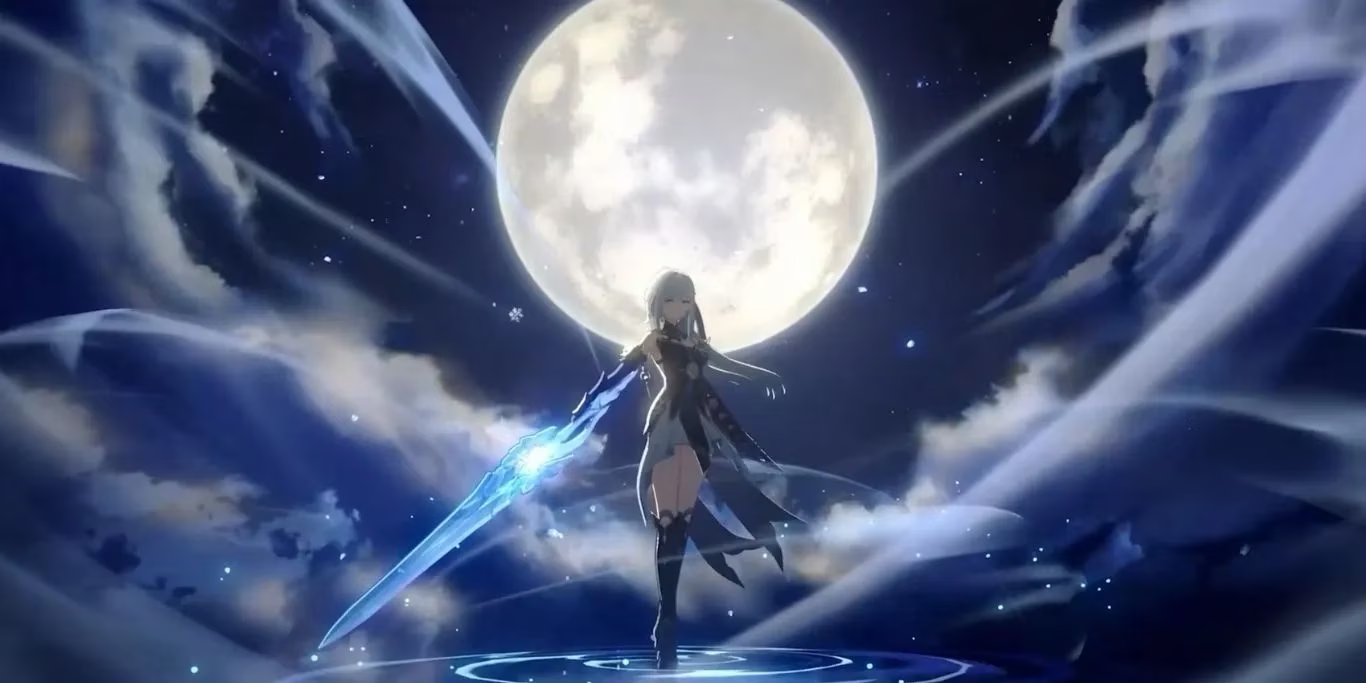
The game launched on PC, iOS, and Android, but the community’s heartbeat truly synchronized when the PlayStation 5 version materialized on October 11, 2023. I saw the announcement echo like a signal flare across social media; over a million pre-registrations proved how deeply console players craved this journey. That same Version 1.4 update gave us the ice queen Jingliu, whose blade dances with a sorrow so cold it freezes time itself—a character whose combat rhythm resembles a glacier cracking in slow motion. By 2026, the platform family has expanded further, but those early days taught us the importance of checking specifications: even now, I keep a mental checklist of requirements for smooth exploration across PC, mobile, and console, much like a captain verifying star charts before a warp jump.
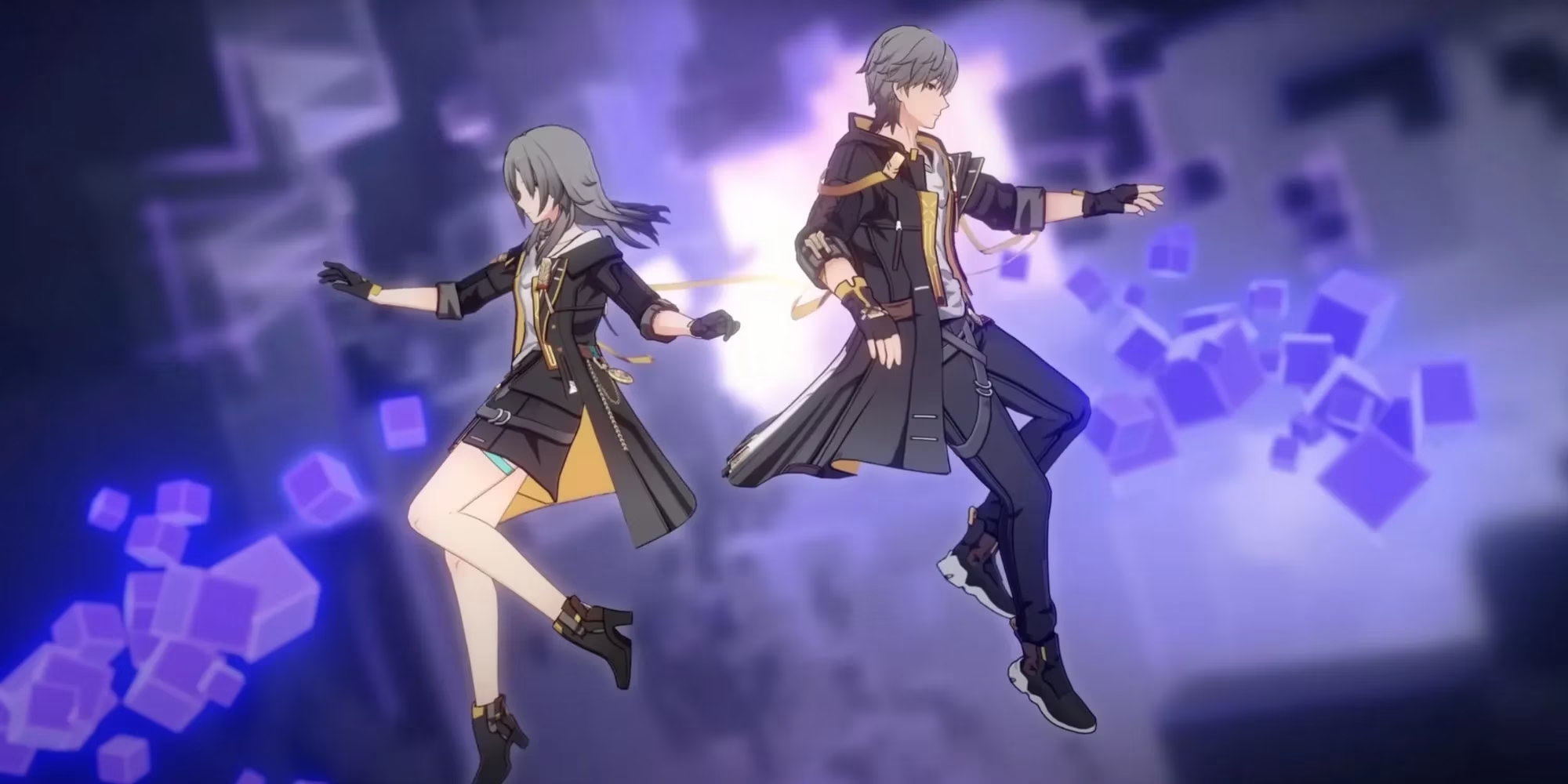
From the very first hour, I was confronted with a choice that still sparks debates in taverns across Belobog: Caelus or Stelle? I chose Stelle, drawn to her comet-tail coat and the quiet determination behind her eyes. The beauty of Star Rail’s design is that this decision is purely aesthetic, a canvas for self-expression rather than a narrative fork. Whether you pilot a male or female Trailblazer, the Stellaron within beats identically—Kafka’s planting of that world-ending seed feels equally personal regardless of your avatar. It is a liberation from the unspoken “canon” pressures of HoYoverse’s earlier games, and it reminds me that identity here is a brush, not a cage.
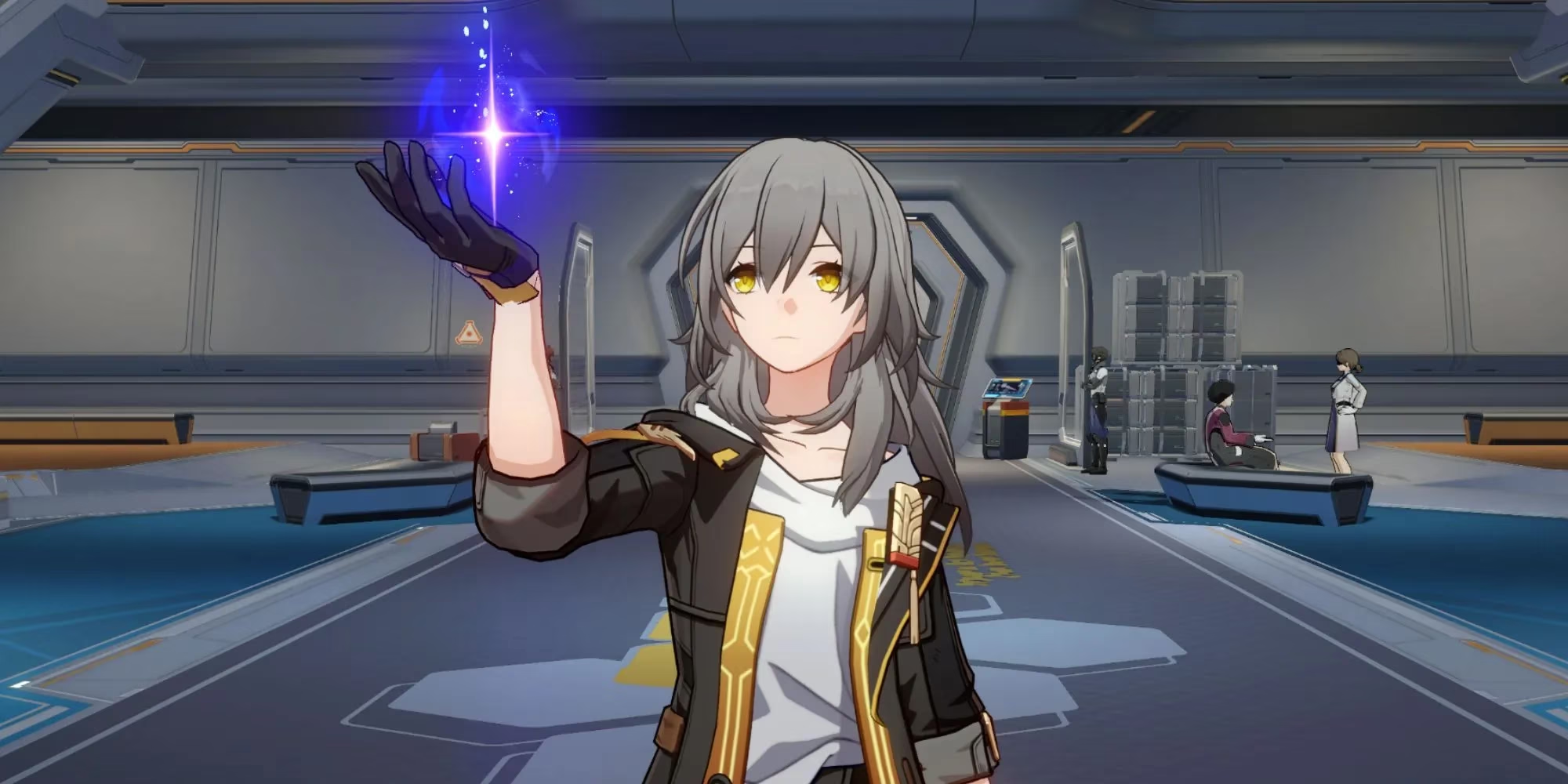
The daily rhythm of a Trailblazer remains a meditative ritual. Unlocking Daily Training after my frantic escape to Jarilo-VI with Sampo felt like being handed a pocket watch in a dimension where every tick grants 60 Stellar Jades. In 2026, the reward structures have deepened, but the core loop—a brief morning patrol of Calyxes and assignments—still serves as my caffeine. It’s a testament to the game’s design that this routine never feels like a chore; rather, it’s an anchor that keeps my account progression sailing steadily toward the next limited banner.
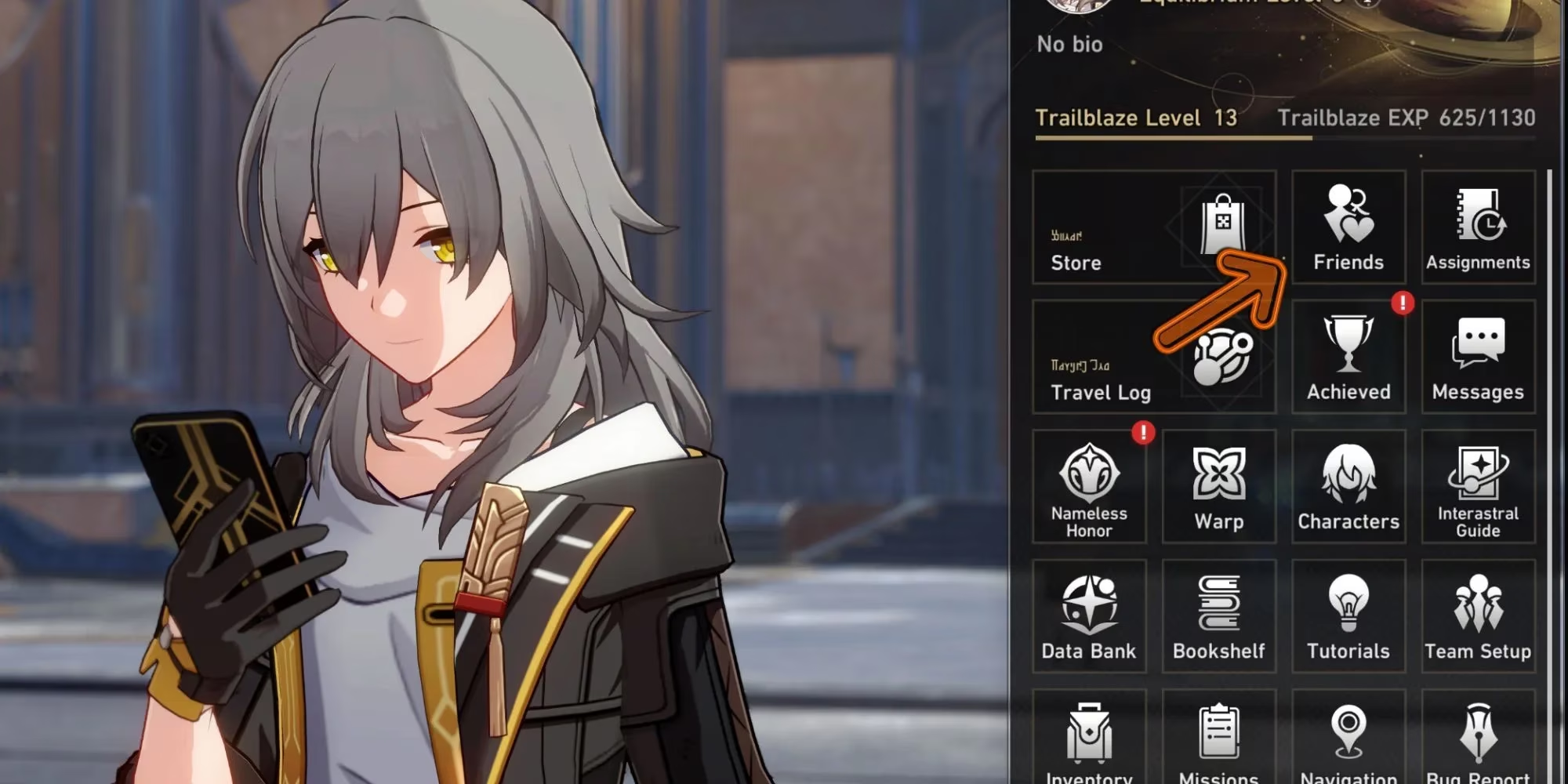
Friendships forged in the stars are the game’s hidden treasure. I’ll never forget the clumsy excitement of finding the Friends menu after boarding the Express, my UID a beacon for allies. Adding someone felt like exchanging coordinates in an infinite galaxy; those random player requests often blossomed into raid partners for the Simulated Universe. Two interface tab have remained the same—left for your current crew, right for discovery—a minimalist design that parallels how real connections are made: either through deliberate search or serendipitous encounter.
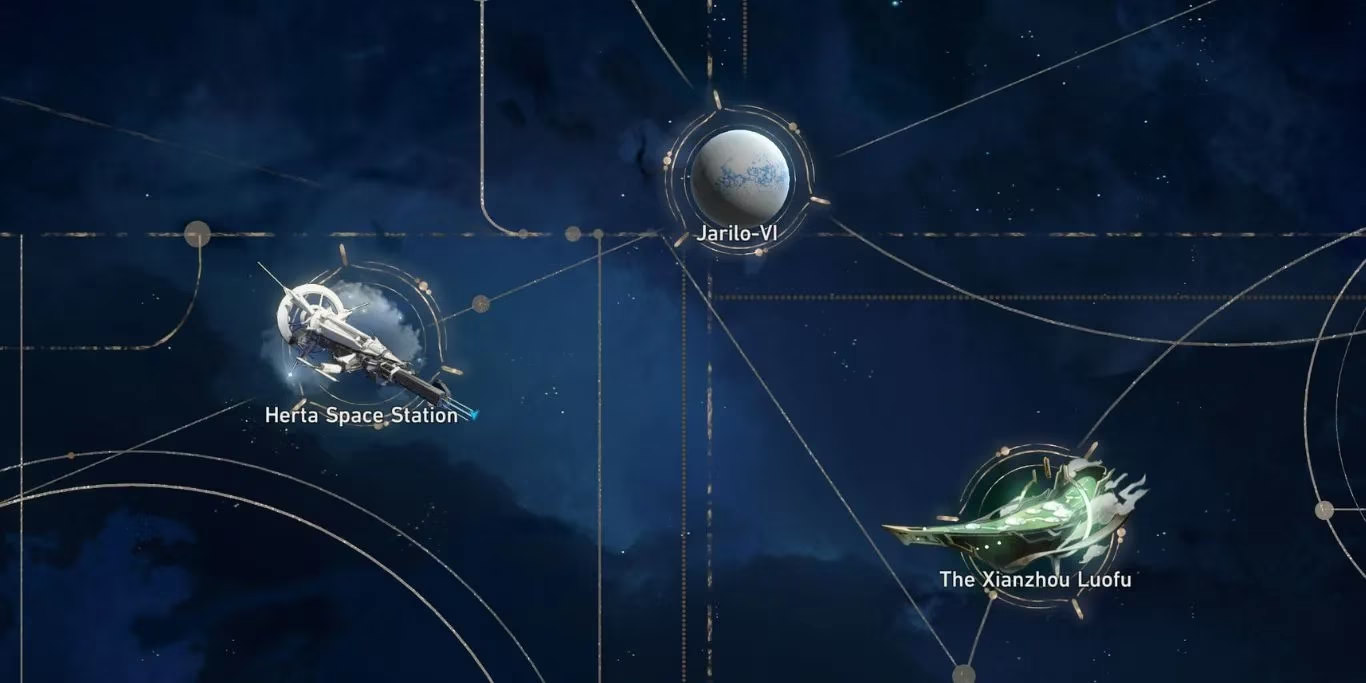
The spatial scope of the game in 2026 is staggering. When I began, only three locations orbited the narrative: Herta Space Station, the frozen bones of Jarilo-VI, and the silkpunk majesty of the Xianzhou Luofu. Back then, Luofu’s story hung unfinished, a dangling thread that tugged at my curiosity. Now multiple arcs have bloomed—Penacony’s dreamscape still haunts my nights—and the world map resembles a spiral galaxy thick with chests, puzzles, and Stellaron crises. Each new planet arrives like a symphonic movement that reshapes the central melody of Akivili’s path.
Dialogues in this universe are a delicate dance. HoYoverse has always been coy about true choice, and Star Rail initially seemed to follow that script: most replies lead to the same destination, albeit with the occasional hidden achievement glittering like mica in mundane stone. Yet I’ve learned to lean in, because some Companion Missions genuinely fork, altering the twilight of a quest with a single sentence. It’s like being handed a compass in a magnetic storm—you might still reach the shore, but the ghost of an uncharted path shimmers beneath the waves.
Planar Ornaments, those game-changing relics, became my obsession after I clawed through Simulated Universe World 3. The moment I first used Immersion to claim a five-star sphere, the mechanic clicked: it’s a dance with probability where Trailblaze Power transforms into hope. To this day, farming an optimal set feels like panning for gold in a river of starlight—most flecks are worthless, but the one that shines can redefine a character’s destiny. With the later additions of Divergent Universe modes, Herta’s simulation has become the crucible where I test not just teams, but my own patience and strategic poetry.
The links to Genshin Impact and Honkai Impact 3rd are like family resemblances across alternate realities. I smile each time Seele or Bronya strides past, their names carrying echoes of other worlds while behaving entirely on their own terms. The open-world exploration shares a warm familiarity with Teyvat’s chest-hunting, but the turn-based combat is a distinct flavor—a chess match played at lightspeed, where breaking an enemy’s toughness bar is the ultimate check. For veterans of HoYoverse, these callbacks are winks across the void; for newcomers, they are simply well-crafted characters standing on their own merit.
Gacha, of course, is the engine that hums beneath every session. Since that first tutorial pull, I’ve learned to read pity counters like tea leaves, hoarding Stellar Jades with the discipline of a monk. In 2026, the roster has exploded with five-star juggernauts like Acheron, Firefly, and the ever-elegant Black Swan, each launch accompanied by the thrill of a 50/50 coin flip that can crush or coronate a month of saving. It’s a system that still stings and soars in equal measure, but the constant stream of new planets and simulated modes ensures the currency flows if you adventure widely enough.
Looking back from 2026, Honkai: Star Rail has aged like a good star system—expanding, collapsing, and reforming with each content update. The initial FAQ questions that guided my first steps now seem quaint, yet they were the ignition for a journey that has consumed thousands of hours. Whether you’re boarding the Astral Express for the first time or are a seasoned Nameless, the game remains a cosmos brimming with stories, strategems, and the quiet beauty of a train cutting through the dark, forever chasing the next world.