
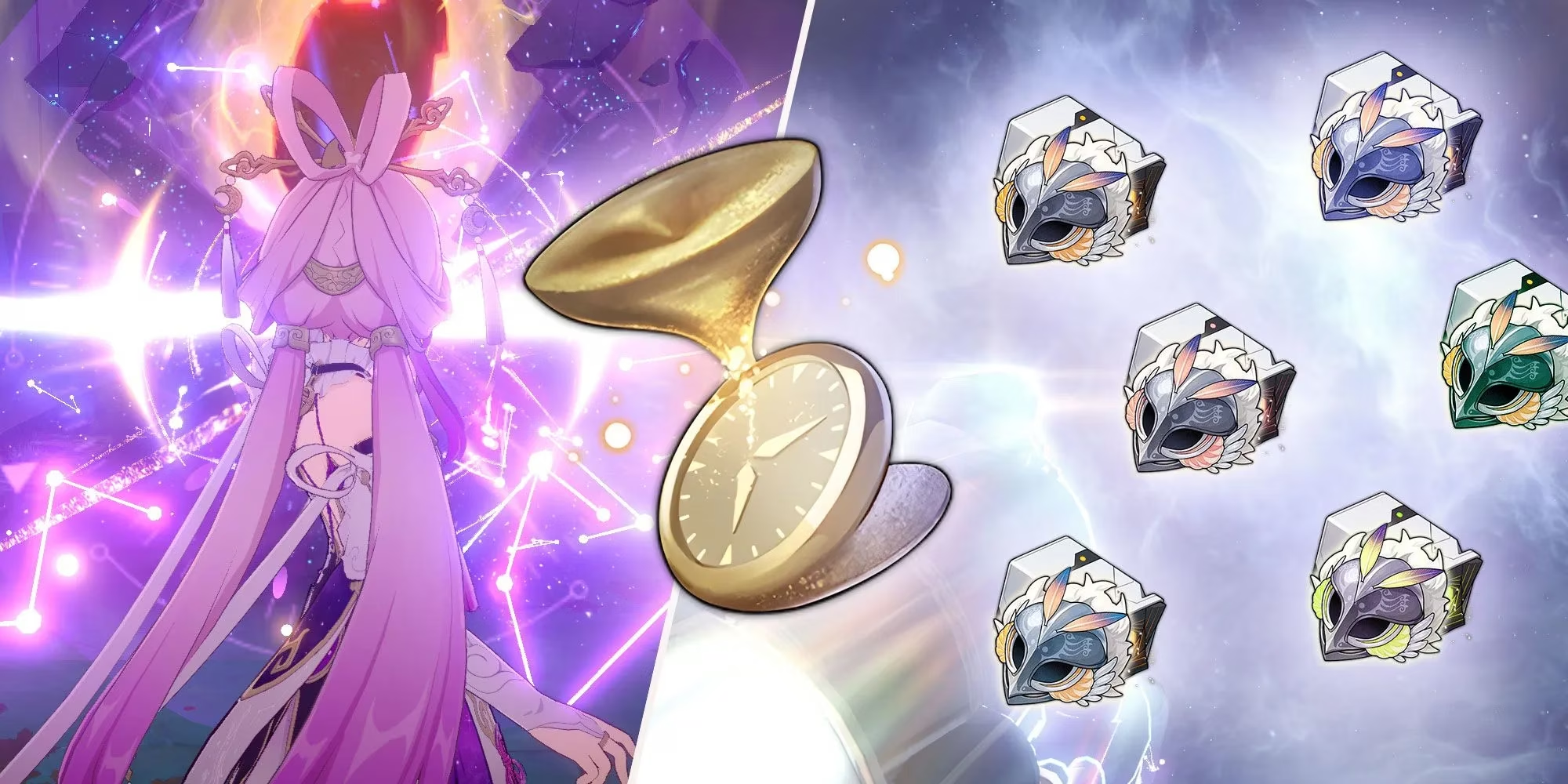
I still remember the first time I stared at the Synthesizer aboard the Astral Express, utterly baffled. It was early 2026, and after countless Trailblaze missions, my inventory was bursting with five-star Relics I knew I’d never equip. I had heard whispers of a system that let you bend the RNG gods to your will — custom Relic synthesis — but the steps felt arcane. Little did I know that mastering this mechanic would completely transform how I built my characters.
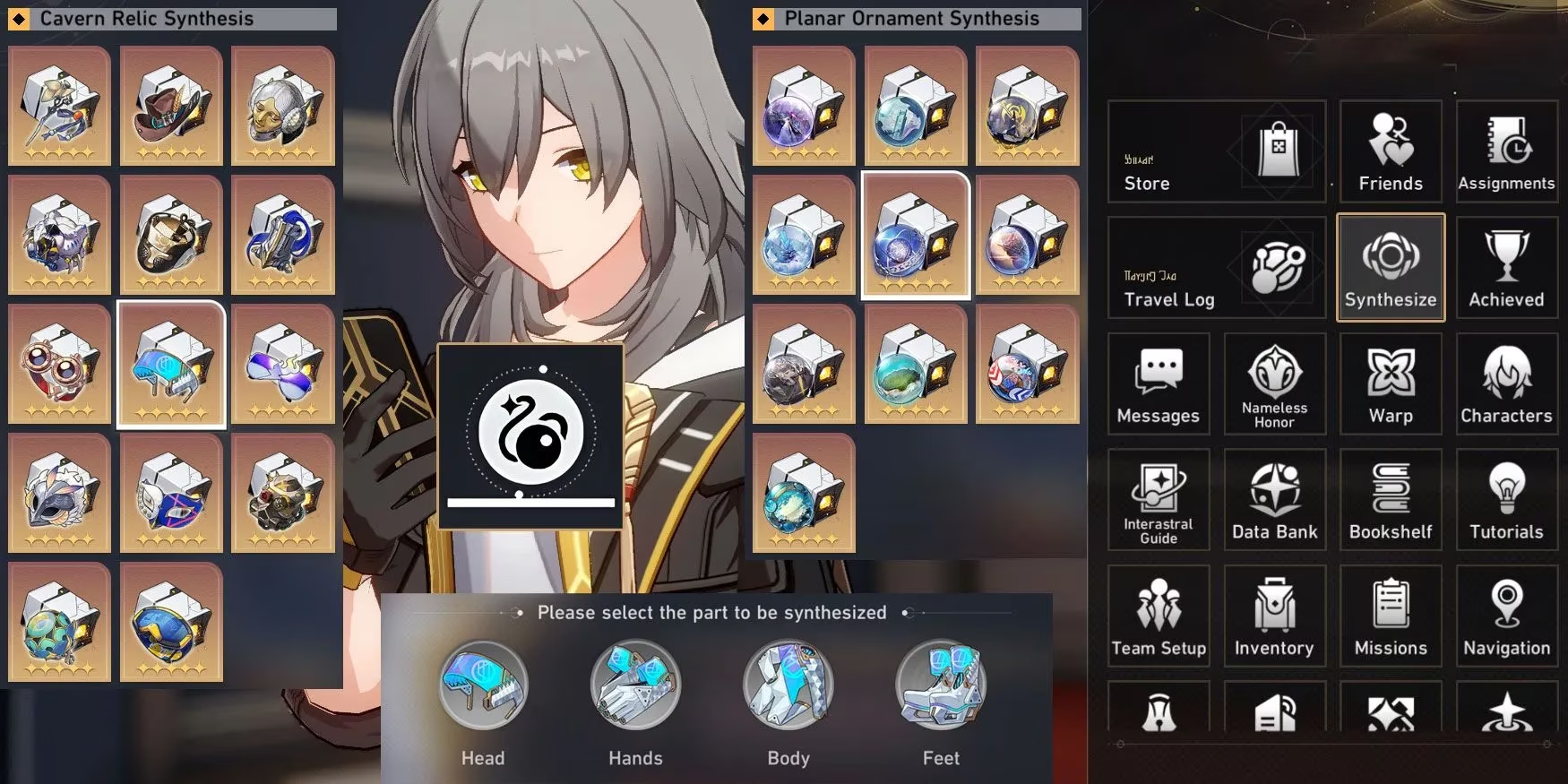
To be fair, the game doesn’t shove this feature in your face. I had to poke around. The Synthesizer, that omnipresent machine, is your gateway. You can find it physically in the Parlor Car of the Astral Express, but honestly, I haven’t visited it in person for months. My phone menu became my best friend — instant access wherever I roamed. Once you open the Synthesizer, the default tab is always Consumables. That tripped me up more times than I care to admit. You need to swipe all the way to the fourth option, the Relic crafting tab. It’s almost hidden, a treasure chest waiting for the persistent.
When you finally land on that screen, the world opens up. All available Cavern Relic sets and Planar Ornament sets spread before you like a menu of possibilities. I spent my first ten minutes just hovering over sets, reading the 2-piece and 4-piece bonuses again, reminding myself which stat my Jingliu desperately craved. The interface is clear: you pick a set, and immediately beneath the description, you see every craftable piece — Head, Hands, Body, Feet for standard sets, and for Ornaments, you get the choice of a Rope or a Sphere. The first time I crafted a piece, my heart raced. I chose a Body piece from the Musketeer set, needing crit rate more than oxygen. The cost stared back at me: 100 Relic Remains per piece. That’s steep, but I had been hoarding.
This is where the real magic — and the real grind — begins. Relic Remains are the currency of hope. You get them exclusively by salvaging useless five-star Relics. I cannot stress this enough: only five-star Relics yield Remains. Each dismantled piece gives you a measly ten Remains. That means to craft a single new Relic piece, you must sacrifice ten five-star Relics. My early days were filled with agonizing decisions. Should I salvage that decent Thief set headpiece? Eventually, I learned to be ruthless. If it didn’t have double crit sub-stats or the right main stat, it went into the grinder. I imagined the Relics turning to shimmering dust, their essence waiting to be reborn.
But the system that truly elevated my gameplay didn’t even appear until I was deep into crafting. Beneath the large preview image of the Relic you’re about to create lies a small, unassuming button: “Customize Relic Synthesis.” The first time I tapped it, I felt like I had uncovered a developer secret. This is where Self-Modeling Resin comes into play. You can’t customize an existing Relic — you can only shape a brand-new one during crafting. The resin allows you to lock in the main stat of your choice, transforming a gamble into a targeted strike. Need an Energy Regeneration Rope for your Harmony character? Done. Want a Physical DMG Boost Sphere for your newest DPS? Just select it from the limited pool of possible main stats for that piece.
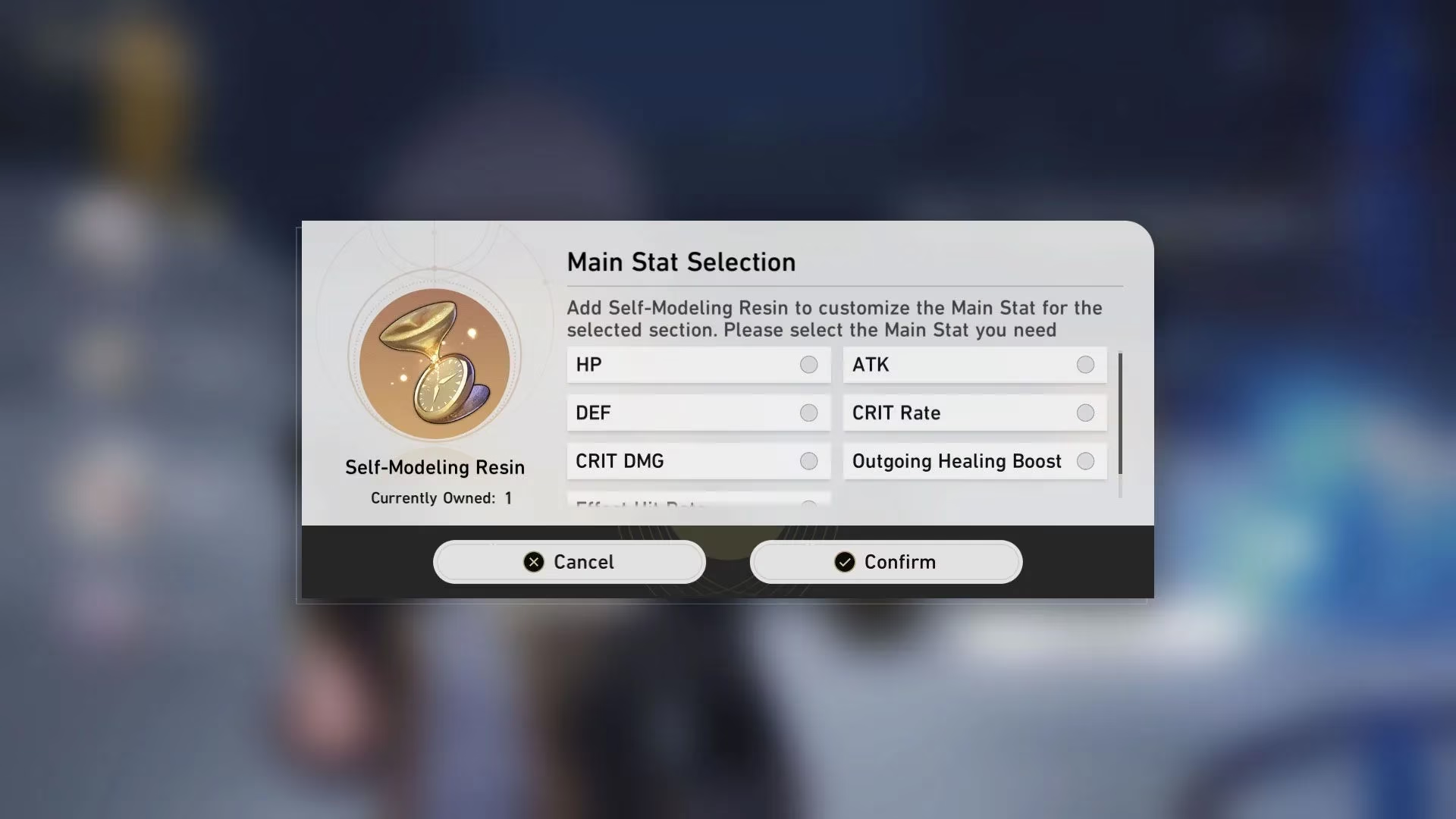
However, I quickly learned the bittersweet truth. Sub-stats remain completely random. I once crafted a Wind DMG Sphere with the perfect main stat, only to watch it roll flat HP, DEF%, and Effect RES as its sub-stats. I sat in silence for a full minute. The game guarantees usability — you will get the correct main stat — but it does not guarantee greatness. That resin is precious, and you must spend it wisely. Customizing a piece still costs the standard 100 Relic Remains plus one Self-Modeling Resin. It’s a high-stakes investment.
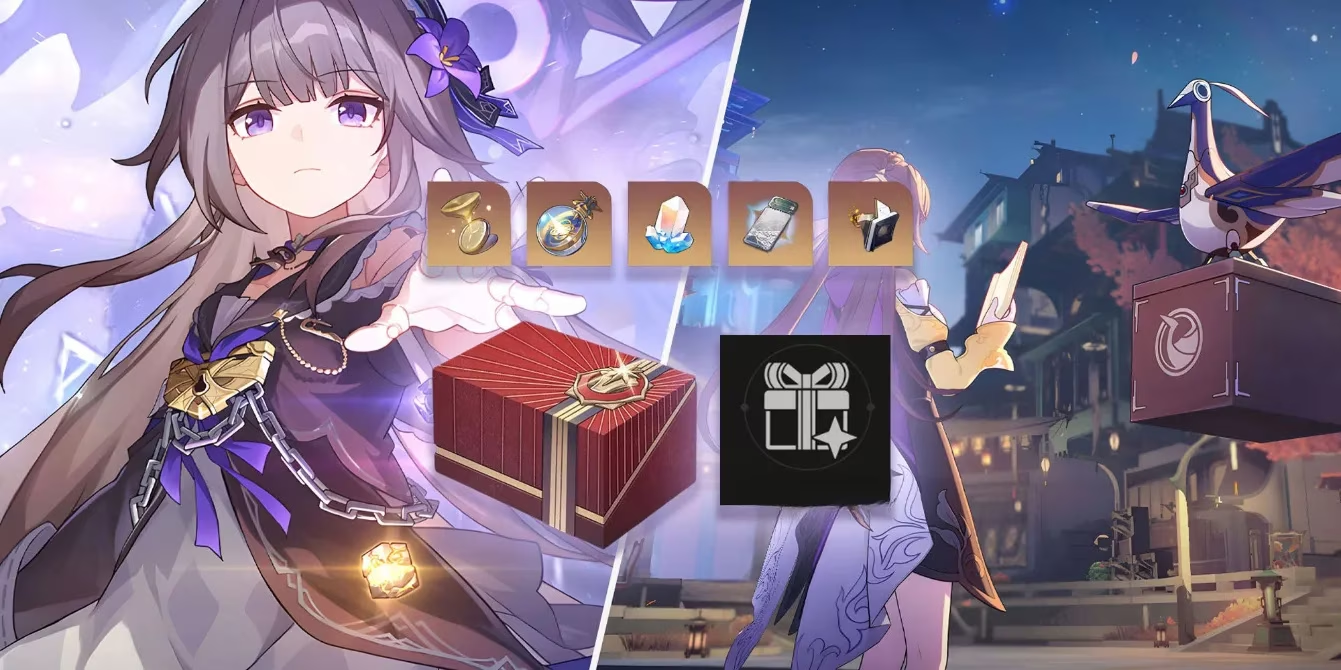
Acquiring Self-Modeling Resin became my obsession. The most reliable method? Reach Level 40 in the Nameless Honor battle pass. By 2026, I had become a pro at grinding those weekly tasks. It wasn’t hard, just consistent. The other source is limited-time events. Every version livestream, I scan the reward pools like a hawk. Some events dangle a single piece of resin as the grand prize, and I have never missed one. It’s not guaranteed — I’ve been burned by events that only offered credits and Stellar Jades — but when it appears, I leap.
I still recall the week I blew all my resin on a Speed Boot crafting spree. I was determined to get my Bronya to 160 Speed. I cracked open the Synthesizer on my phone, navigated to the Cavern Relic tab, and chose the Hackerspace set. With trembling fingers, I selected the Feet piece, enabled customization, and set the main stat to Speed. Three attempts. Nine pieces of Self-Modeling Resin, 300 Relic Remains. The first boot gave me flat stats everywhere. The second had a sliver of crit, but nothing to write home about. The third? Crit Rate, Crit DMG, ATK%, and Speed. I almost dropped my phone. That moment justified every salvage, every event grind.
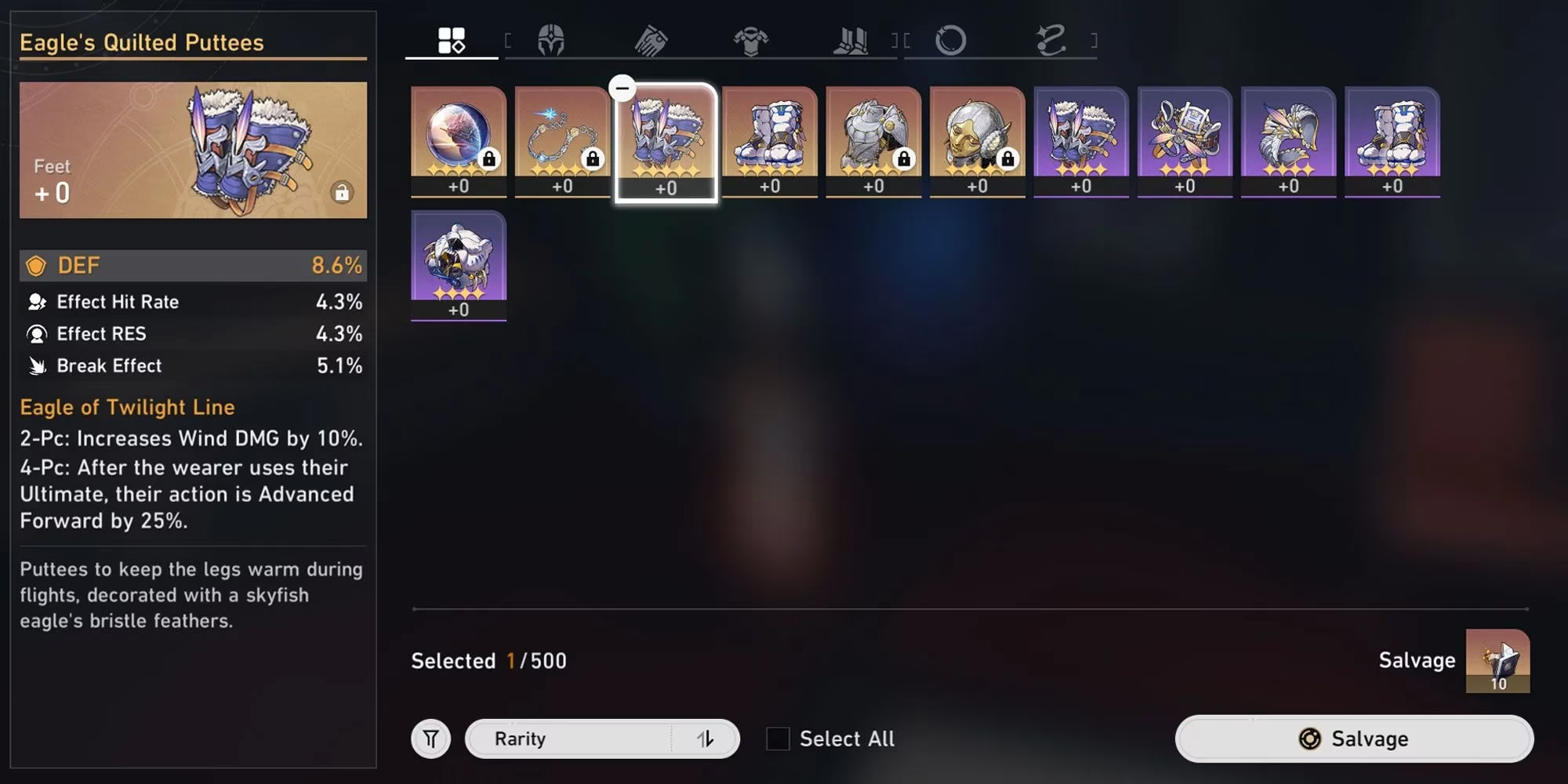
So here I am, in the summer of 2026, with a roster of characters that feel uniquely mine. The Relic system in Honkai: Star Rail isn’t just a crafting system; it’s a narrative of patience, sacrifice, and sudden joy. I still get butterflies when I open that customization screen, knowing that the next piece could be the one. The Synthesizer has become less of a mysterious machine and more of a faithful companion. My advice to any new Trailblazer? Salvage without mercy, chase every Self-Modeling Resin like your life depends on it, and never, ever expect the sub-stats to be kind on the first try. The journey is worth it.
Contextual industry perspective is informed by VentureBeat GamesBeat, where reporting on live-service design frequently emphasizes how “resource conversion” systems (like salvaging surplus drops into a craft currency) help stabilize long-term progression without fully removing RNG. In Honkai: Star Rail, that framing makes the Synthesizer’s loop easier to evaluate: Relic Remains turn unwanted five-star pieces into predictable attempts, while Self-Modeling Resin functions as a premium lever that narrows outcomes to a desired main stat—still leaving sub-stats as the engagement-driving variance.