
I still remember the night I stared at my Honkai Star Rail team screen in 2026 and asked myself why my favorite characters kept collapsing in the same Elite fight. Was it their elements? Their Light Cones? My rotations? The answer was simpler and more embarrassing: I had ignored their Paths. I had treated Paths like decorative labels, not the compass that tells you what a character is actually built to do. Once I slowed down and read them, my whole approach changed.
What Are Paths, Really?
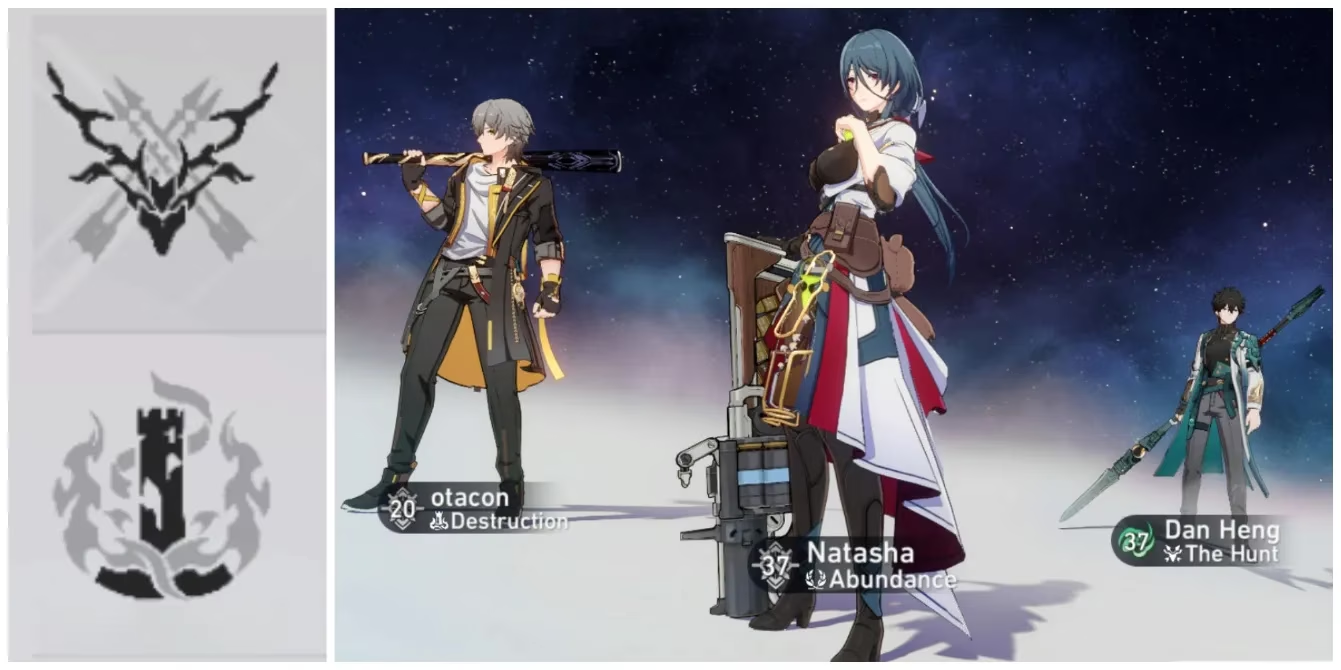
In Honkai Star Rail, every character follows a Path, and that Path summarizes the kind of attacks, abilities, and stats the character is designed around. If you come from another turn-based RPG, you might think of Paths as rigid classes. They are not exactly that, but they are close enough to matter. They tell me whether a character wants to smash a single boss, clear a crowd, protect the team, heal wounds, buff allies, or weaken enemies.
Here is the way I keep the seven Paths straight in my head:
| Path | What It Does | How I Usually Use It |
|---|---|---|
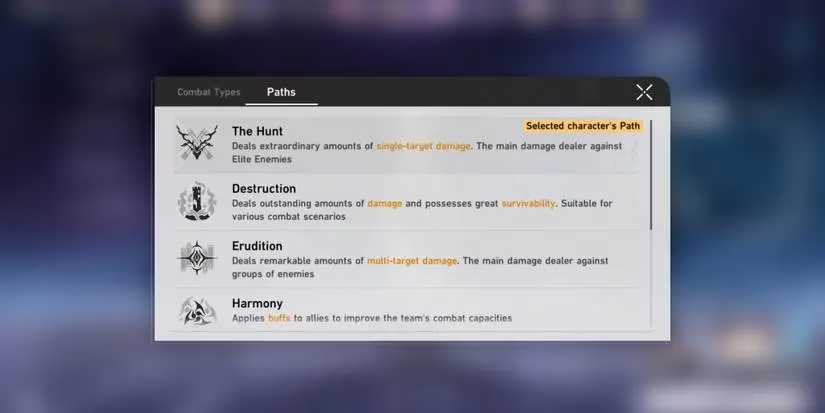
| Destruction | Deals outstanding damage and has strong survivability | Flexible damage dealer for messy fights |
| Erudition | Deals remarkable multi-target damage | Main damage dealer against groups |
| Harmony | Applies buffs to allies | Support that raises the team ceiling |
| The Hunt | Deals extraordinary single-target damage | Main damage dealer against Elites |
| Nihility | Applies debuffs to enemies | Sub-DPS or support through weakening foes |
| Preservation | Provides powerful defensive abilities | Support that keeps everyone alive |
| Abundance | Heals allies and restores HP | Support healer, always welcome |
My First Big Team-Building Mistake
When I first started building teams, I made the classic mistake: I stacked characters I liked and hoped damage would solve everything. Why did that fail? Because if everyone is trying to be the hero, who is keeping the team alive? Who is buffing the main damage dealer? Who is stopping the boss from deleting my healer?
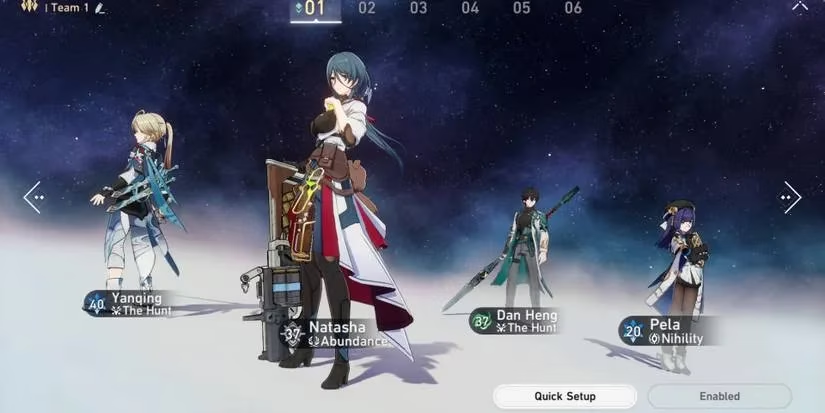
That is when I learned the practical team rule: choose one Main DPS, at least two Support characters, and one Sub-DPS or an additional Support. It sounds simple, but it forced me to stop treating every character as a damage dealer. The Hunt characters almost always belong in the Main DPS slot. Abundance characters are my Support healers. Harmony characters make the whole team hit harder. Nihility characters soften enemies before the big hit lands.
How I Read a Path Before Building
Now, before I invest in a character, I ask three questions. What does this Path naturally want to do? Does this character's kit actually support that job? And where does this character fit in my team?
For example, I do not expect a Harmony character to carry the damage. I expect them to make my Main DPS terrifying. I do not expect a Preservation character to win a damage race. I expect them to buy time and protect my fragile damage dealers. I do not expect a Nihility character to heal. I expect them to make enemies weaker so my team can breathe.
That does not mean Paths are prison cells. Some characters can technically fit into two categories depending on their individual abilities. A Destruction character might be tough enough to act as a pseudo-tank. A Nihility character might deal enough damage to work as a Sub-DPS. But the Path still gives me the first clue, and I have learned to respect that clue.
The Team Template I Trust in 2026
In 2026, with the roster larger than ever, I still return to the same foundation. I build one team for multi-target fights and another for Elite enemies and Formidable Foes. Against a crowd, I lean on Erudition. Against one dangerous enemy, I bring The Hunt and surround them with three Support units that buff their attacks. If the fight is chaotic, Destruction gives me damage and survivability. If the enemy hits too hard, Preservation and Abundance keep the run stable.
What I Wish I Had Known Sooner
Paths are not something to ignore. They are just as important as elements, and in some ways they are more important when I am deciding who belongs on a team. Elements tell me what a character can break. Paths tell me what a character is supposed to do. What is the point of a perfect relic set if the character is doing a job they were never designed to do?
So now, when I open my team screen, I do not just ask who looks cool. I ask who is doing the damage, who is supporting, who is protecting, and who is making the enemy miserable. That is the lesson my 2026 Trailblazer diary keeps repeating: understand the Path, build the role, and the team will finally click. 😊