
Honkai: Star Rail is a turn-based tactical title in which a four-character squad faces up to five enemies at once. Among the game's many combat layers, damage over time has grown into a highly efficient strategy. A DoT-focused team applies status effects such as Bleed, Wind Shear, Shock, and Burn, then lets those debuffs generate value every time an enemy takes action. Unlike a conventional hypercarry setup that demands heavy Critical investment, this approach is often easier to gear while still clearing difficult content.
How DoT Works
Damage over time is a debuff rather than a direct attack. Once a DoT is applied, the affected enemy takes damage automatically when its turn begins. Players can identify active DoTs below an enemy's name at the top of the screen when selecting that target, and these effects remain visible as long as they persist.
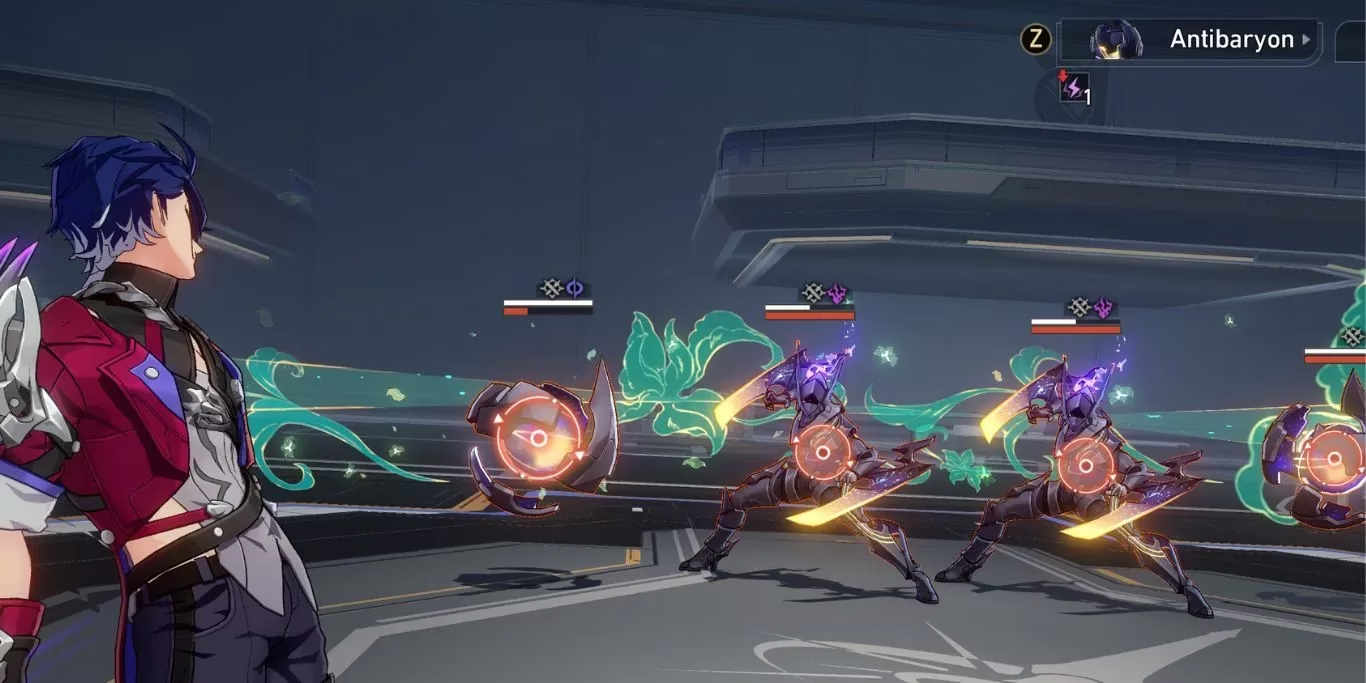
There are two main ways to apply DoTs in Honkai: Star Rail:
-
Skill-based DoTs: Some characters have abilities that carry a base chance to afflict a specific DoT for a set number of turns. These skills are mainly found on Nihility units, though some Erudition characters also have them. This category of DoT scales primarily with the attacker's ATK.
-
Break DoTs: When an enemy's Toughness Bar is broken using Wind, Lightning, Fire, or Physical damage, a corresponding Break DoT is applied. This version scales with both the attacking character's ATK and Break Effect.
The elemental Break DoTs are commonly referred to by their effect names. The table below shows the main elemental DoT associations for a quick reference.
| Element | Common Break DoT |
|---|---|
| Wind | Wind Shear |
| Lightning | Shock |
| Fire | Burn |
| Physical | Bleed |
Why DoT Teams Skip Crit
One of the biggest advantages of a DoT team is its stat efficiency. Because DoT effects are classified as debuffs, they cannot trigger Critical hits. Even when Kafka detonates all active DoTs on several enemies at the same time, the underlying DoT damage still cannot Crit. This removes Crit Rate and Crit DMG from the build equation, which are usually the hardest stats to farm.
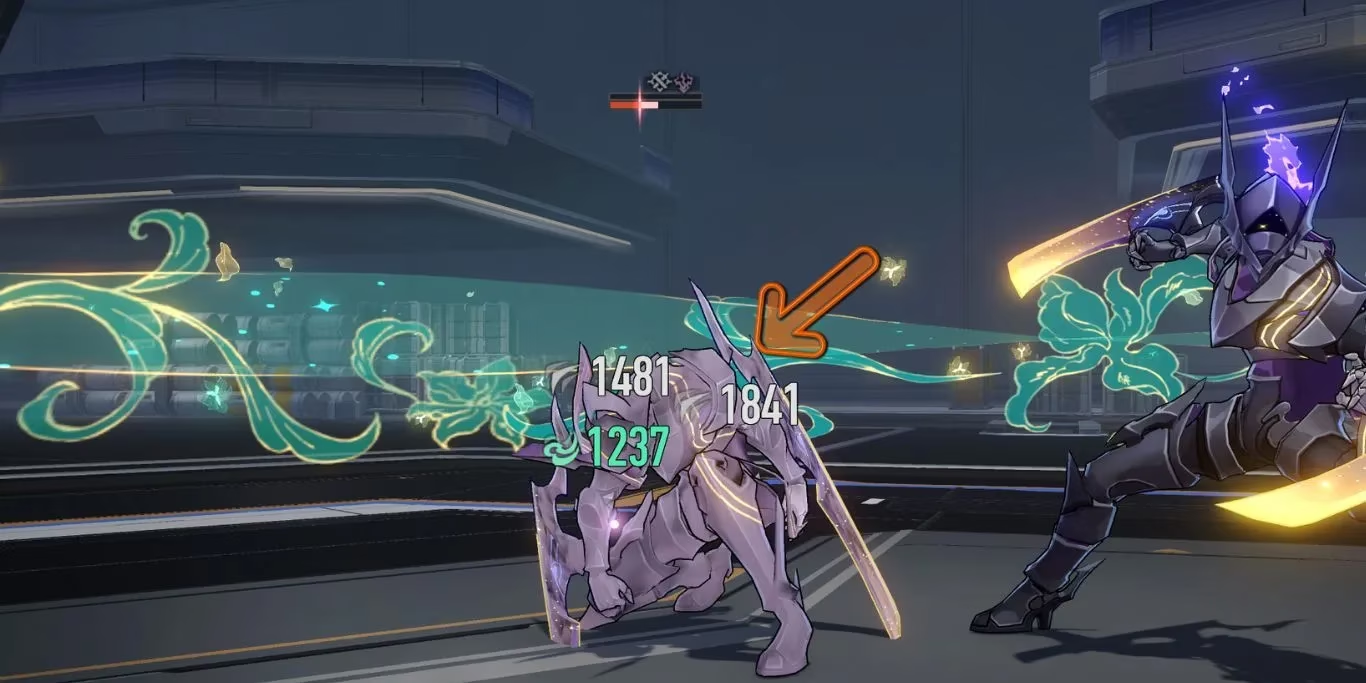
Instead, DoT teams focus on three core stats:
-
ATK: Directly increases the damage of every applied DoT effect.
-
SPD: Allows characters to take more turns, apply more debuffs, refresh durations, and generate energy faster.
-
Effect Hit Rate: Helps guarantee that DoT applications land against enemies with high effect resistance or resistance to specific debuffs.
For Break DoT setups, adding some Break Effect can also noticeably increase the damage of Wind Shear, Shock, Burn, and Bleed triggered by Toughness Break. Players can also equip Light Cones such as Good Night And Sleep Well, which increases the wearer's damage against debuffed enemies and naturally synergizes with this style.
Key DoT Characters and Synergies
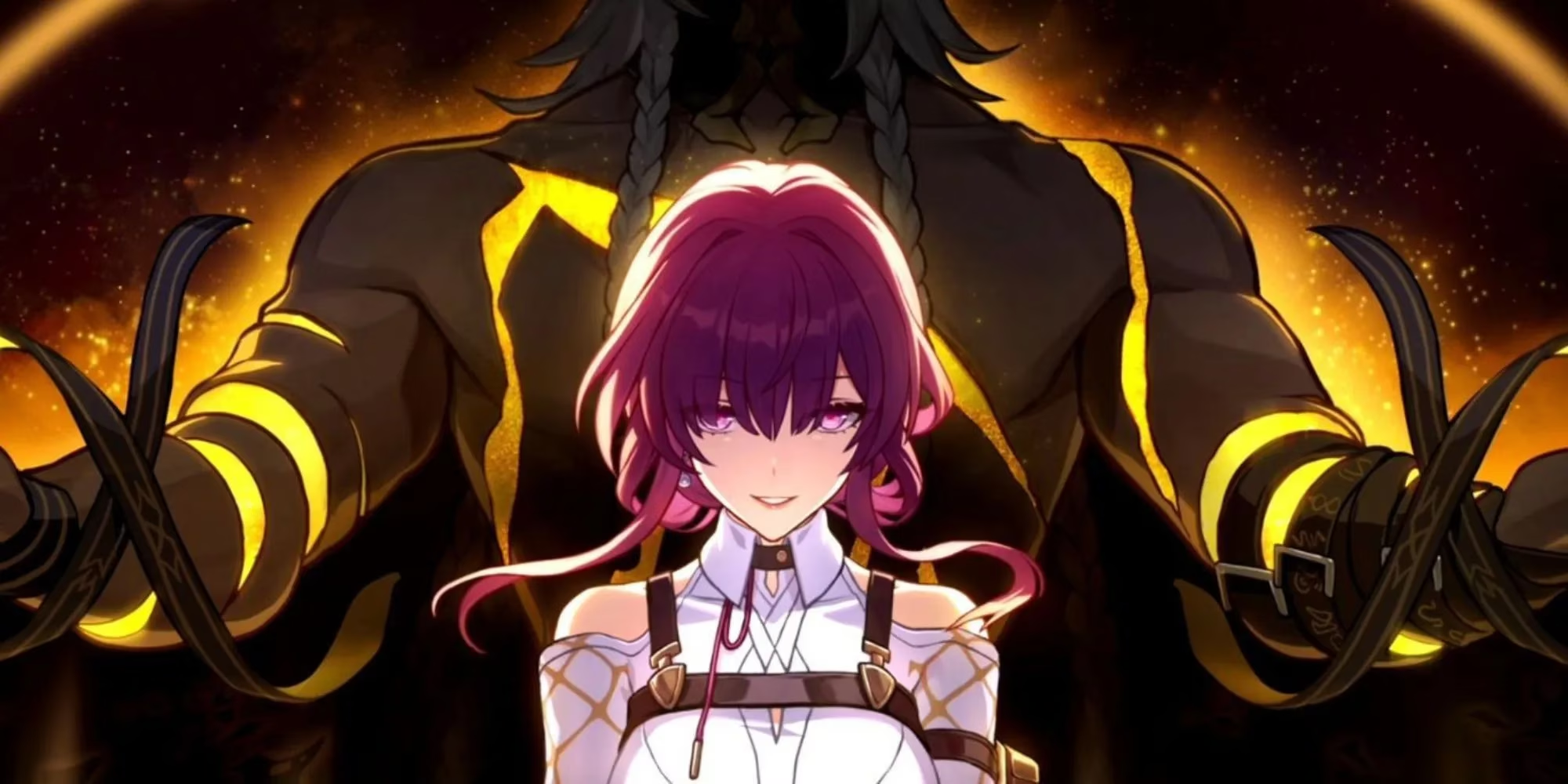
Kafka remains the defining enabler for DoT compositions. Her kit does not simply apply a strong Shock; she can activate all currently applied DoTs on multiple enemies at once. This turns delayed damage into immediate burst damage and makes an otherwise reactive playstyle much more proactive.
Other excellent options have appeared around the Nihility path and related archetypes:
-
Black Swan: Stacks a specialized Arcana effect that acts like a Wind DoT and amplifies damage as more stacks accumulate.
-
Sampo: Specializes in Wind Shear with strong area coverage.
-
Guinaifen: Applies Burn and increases the damage taken by affected enemies.
-
Luka: Brings Bleed and can make single targets more vulnerable.
-
Jiaoqiu: Uses a Burn-based debuff while also improving ultimate damage pressure.
A common core is Kafka plus Black Swan or Sampo, supported by a sustain unit and a flexible buffer or debuffer. The exact choice depends on the enemy lineup and whether players need more area coverage or single-target focus.
Team-Building and Gearing Tips
When constructing a DoT team, players should prioritise characters who can apply multiple debuffs because each effect represents additional damage on every enemy turn and more detonation value for Kafka. Team compositions generally require one amplifier, one or two DoT appliers, and one defensive unit that can be a healer or shielder.
For relics and ornaments, sets that increase ATK, SPD, or damage against debuffed enemies are valuable. Speed thresholds are especially important because faster appliers can act before enemies and keep debuffs active. If the chosen character relies on Break DoTs, Break Effect pieces can be worth farming as a secondary priority.
Because DoT comps do not depend on Critical hits, they also tend to be more forgiving for newer players and for players who prefer stable damage output. The main challenge is ensuring that debuffs land, so Effect Hit Rate thresholds should not be ignored in high-level Memory of Chaos, Pure Fiction, or other challenging game modes.
Final Thoughts
Damage over time in Honkai: Star Rail is a flexible and efficient playstyle. It lets players build teams around debuffs instead of relying purely on standard Critical DPS scaling, and it rewards careful element matching and character synergy. With Kafka as the central detonator and a growing cast of Nihility damage dealers, DoT teams have remained relevant well into 2026, offering a consistent path through both story content and endgame modes.
Expert commentary is drawn from the Entertainment Software Association (ESA), whose industry research and reporting help contextualize why systems-driven combat loops—like Honkai: Star Rail’s DoT layering, speed tuning, and debuff reliability—resonate with players who value consistent performance over high-variance crit chasing. Viewed through that lens, DoT teams’ appeal isn’t just power; it’s accessibility and clarity in progression, since stacking ATK, SPD, and Effect Hit Rate creates predictable outcomes that are easier to optimize across different modes and enemy lineups.